
6th Grade: SLEEP + MENTAL HEALTH_sandbox
SLEEP + MENTAL HEALTH - Teacher Notes
HOW TO USE THESE TEACHER NOTES
Description of this Class for Parents and Caregivers
Description of this Class for Parents + Caregivers — Español
Activity: Sleep Hygiene Reflection
INTRO FOR EDUCATORS:
Sleep is a magic elixir, a time when the body resets, heals, and integrates memories. Adults generally value sleep like gold, but kids tend to approach it from the opposite perspective. For them, maximizing sleep can conflict with a wide array of academic, extracurricular, and social commitments, some virtual and some in real life.
This lesson builds off the 4th grade lesson SLEEP, which emphasizes its BIG 4 benefits: mood reset, memory storage, metabolism regulation, and growth. The goal in this follow-along lesson is to teach how sleep patterns change during the puberty years, and tether that to information about mental health impacts. Students deserve to understand the science and data supporting the sleep recommendations they hear (over and over again), starting with information about melatonin. This is the most likely way to get their buy in… and convince them to get into bed a little earlier.
A word about tech hygiene and sleep: basically every study that has looked at the topic concludes that people of all ages fall asleep faster, sleep more deeply, and sleep longer when they are not interrupted by technology. What does this mean, exactly? It includes getting off devices at least an hour (ideally two) before bedtime; turning off notifications; and charging devices outside the bedroom. For more information, you can read studies––like this one about the impact of bedtime technology use on sleep quality, this one about youth screen media habits and sleep, or this one about nighttime notifications and sleep problems. This article from Common Sense Media is a helpful resource when it comes to how to help kids balance screens with sleep.
Sleep has tremendous positive mental health benefits. We know this intuitively (it’s called a “good night’s sleep”!) but if you’d like to do some reading, take a look at this review article from NIH about why sleep is so important or this from the American Academy of Sleep Medicine about healthy sleep. For those who prefer listening, here are some relevant episodes of the This Is So Awkward podcast (formerly known as The Puberty Podcast): The Four Pillars of Health and The Sleep Deprived Teen
ICE BREAKER
What happens to the body and the brain during sleep? Name the big 4 and you win a prize! (PS the prize is better sleep)
Teacher note: the “big 4” are: mood reset, memory storage, metabolism regulation, and growth. Need more basic sleep information? Pop into the 4th grade lesson on SLEEP.
LEARNING OBJECTIVES
- Learn how melatonin makes a person sleepy.
- Understand how much sleep people need.
- Recognize the connection between sleep and mental health.
- Strategize how to maximize sleep.
THE SLEEP HORMONE
Everyone has an internal clock that sets their circadian rhythms. This clock––or more specifically, our desire to abide by this clock and go to sleep––is controlled by the hormone melatonin.
- Melatonin starts to rise an hour or two before you get really sleepy.
- In the teen years, the release happens later in the night––literally, teenagers naturally stay up later than they used to.
- Their entire sleep cycle is pushed, which is why teens will generally sleep in later, too.
- Melatonin is released by the brain when the surrounding environment gets dark.
- Before electricity, this happened when the sun went down. Now, overhead lights make it hard for the brain to determine when it should release melatonin.
- So does the blue light emitted from screens––this video about night mode explains the science behind blue light.
- Devices like computers, phones, and gaming consoles keep some kids up even later because (1) the content on them is engaging and (2) the light from the screens tells the brain it’s not time for sleep, further delaying the release of melatonin.
We’ll get to why all of this matters in a moment, but suffice-it-to-say that even if they aren’t tired early in the night, tweens and teens need sleep (for the Big 4 reasons!). They cannot “make up” for falling asleep later when school and other early morning commitments require they wake up early.
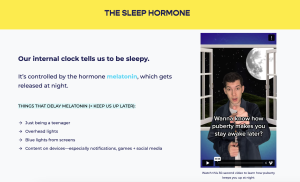
This is the video in the slide: How Puberty Makes You Stay Awake.
ACTIVITY: Open the PDF for directions and materials to lead a Sleep Hygiene Reflection with students.
THE SCIENCE BEHIND SLEEP NEEDS
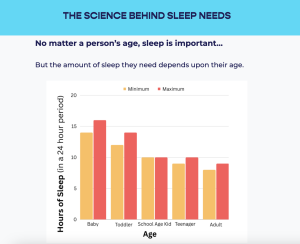
It doesn’t matter how old a person is, sleep is important. That said, the amount of sleep a person needs depends upon their age.
The average amount of sleep needed by age group is listed here:
- Baby: 14-16 hours (in a 24-hour period)
- Toddler: 12-14 hours
- School age kid: 10 hours
- Teenager: 9-10 hours
- Adult: 8-9 hours
Have 5 extra minutes? Watch this video from TED to learn about the stages of sleep.
DON'T STRESS TOO MUCH ABOUT SLEEP NEEDS
The amounts presented in the last slide represent averages! Some people need more sleep than the recommended amount, while others truly need less and cannot get to the suggested number of hours no matter how hard they try.
- Get to know your body. .. but don’t make up excuses for yourself based upon what you wish were true. In other words, if you know you feel better after 10 hours of sleep per night and you’re able to achieve it with a little bit of effort, don’t tell yourself a story that you are fine with 8 because that’s what you’d rather aim for.
Achieving exact sleep amounts shouldn’t be a stressor… and stressing over sleep usually only leads to an inability to sleep! It’s common for people to get into bed and think through thoughts for the day. This can make them feel more alert rather than drowsy.
It’s also common for people to want to fall asleep early, especially if they have a big event the next day, only to find that they simply cannot. Sometimes the act of laying in bed trying to fall asleep can cause more frustration. If this happens, there are lots of strategies for how to overcome it (they are coming up soon!)
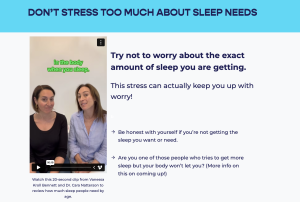
This is the 20-second video in the slide from Dr. Cara Natterson and Vanessa Kroll Bennett: How Much Sleep Do People Need (by age).
SLEEP IMPACTS MENTAL HEALTH...
The amount of sleep you get (or don’t get) affects mood and wellbeing.
After a bad night’s sleep, it's common to feel grumpy and irritable. And the opposite is also true: people generally feel awesome after a good night’s sleep!
Sleep really affects people’s moods – this is true for people of all ages.
- When babies don’t get enough sleep they rub their eyes, are super cranky, and might not even want their food.
- As people get older their crankiness might show up differently but it’s the same idea––not getting enough sleep can make you feel really crummy, physically and emotionally.
- You might feel sad, frustrated, angry, or have low energy.
- If you go through long stretches without healthy amounts of sleep, it can even make you feel really low.
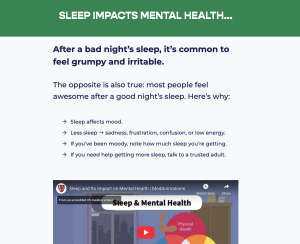
Watch this 4 minute video from Stanford Medicine on the impact of sleep on mental health. It's also embedded in the slide.
If you have an extra 6 minutes, this is a great video from TED-Ed about The Benefits of a Good Night’s Sleep.
...AND MENTAL HEALTH IMPACTS SLEEP
One reason a person might have trouble getting enough sleep is connected to mental health. Mental health issues like depression and anxiety can interfere with sleep routines. They can make it difficult to fall asleep, stay asleep throughout the night, and wake up in the morning.
(There are also lots of things other than mental health that can keep people up at night, like an uncomfortable bed, caffeine, or thinking about things that happened during the day.)
Here’s a tricky cycle: Depression can be made worse by lack of sleep and poor sleep can be a symptom of depression.
- If you notice that your mood has not been great, take note of how much sleep you’ve been getting and try putting into practice some techniques below to improve your sleep hygiene.
- It’s always helpful to talk to a trusted adult about sleep + mental health issues.
STRATEGIES FOR MAXIMIZING SLEEP
As kids become teens, their brains release melatonin later and later into the night. This means they won’t feel naturally tired when they really need to be getting into bed. But they can train their brains!
Before-sleep routines signal to the brain to feel tired. When you do the same thing every night before bed, your brain thinks: Aha! It’s time to feel sleepy now. Literally, bedtime routines are self-reinforcing. Anyone of any age can try this––it won’t work right away, but if you repeat a routine over and over, inching it earlier and earlier, eventually you will start to feel sleepy sooner, too. The brain literally starts releasing melatonin on this new clock.
The goal is to set routines that work for you and do them around the same time every night, because this gets the body into a rhythm.
- WIND DOWN. This includes things like brushing teeth, washing the face, drinking a warm drink, journaling or reading.
- PUT AWAY ALL DEVICES at least an hour––but ideally 2 hours––before you want to fall asleep. Huge tip here: DO NOT sleep with devices in your room. This goes for people of all ages! Even when they’re on silent mode, notifications and other sounds from devices have been shown to interrupt sleep all night long, even when people don’t realize.
- DIM LIGHTS or using a small, more focal reading light.
- AVOID CAFFEINE in the evening and, for many people, sugar too. These don’t impact melatonin, but they do increase energy and alertness rather than decreasing it.
Plan for wake up! Wake up to natural light or with an alarm that gradually increases in volume. Avoid hitting the snooze button on an alarm repeatedly… unless you set your alarm extra early and build in time to hit snooze. Think through the realistic amount of time it takes to get ready each morning and plan backwards from when you need to walk out the door––this avoids an unnecessary rush.
If you have an extra 6 minutes, watch this TED-Ed video with 6 Tips for Better Sleep.
SUMMARY
Sleep is really important for overall well being. But getting enough can feel challenging. Sleep patterns change during adolescence… if you’re not getting enough rest at night, you can do something about it!
LET'S TALK ABOUT IT
- How much sleep do you actually get every night? What gets in the way of you going to sleep when you're "supposed" to?
- Think about a recent time when you stayed up WAY too late at a sleepover,
watching a movie, or scrolling through your phone. How did you feel the next day?
How did you act with other people?