
Copy of SAFETY BASICS
SAFETY BASICS – TEACHER NOTES
Teacher notes are designed to supplement lessons throughout That Health Class. The goal of these notes is to offer basic background information on the topic for educators who have less experience with the subject matter and to offer a deeper dive into biology, physiology, and data for experienced educators craving more information. Here’s how the teacher notes are organized:
- INTRO FOR EDUCATORS: This is not information to be presented in class, but rather sets the stage for why this content is relevant and, in some cases, how the information has changed over time. It also includes an episode from the This Is So Awkward podcast for even more information on the topic.
- TEACHING POINTS: These always begin with an ice breaker and set of learning objectives, followed by the substance of the lesson, organized with the corresponding slide at the start of that section of the notes. When there are PDFs describing in-class exercises, links will appear both in the relevant section and also at the very top of this document.
- LET’S TALK ABOUT IT: Offers conversation starters to solidify learning at the end of each class or can serve as an exit ticket if needed.
For more information on any given lesson across the entire That Health Class curriculum, we encourage you to login to the Less Awkward Hub or search the Resource We Love list.
INTRO FOR EDUCATORS
As students become more physically confident and socially independent, they will find themselves in new situations. They might start walking to school, riding in cars with different adults, playing on sports teams, visiting friends’ houses, or exploring outdoors more often, increasingly without constant adult supervision. This expanding independence is developmentally appropriate, but it also demands new tools for thinking through safety in real time, especially when adults aren’t right beside them.
Kids benefit from clear safety rules, predictable routines, and lots of guided practice before they can confidently apply safety strategies across different settings. The goal is for them to learn to recognize risks, problem-solve on the spot, and listen to their body’s cues when something feels “off.”
This lesson does not use fear-based messages. Rather, it encourages students to think critically, check their surroundings, and ask trusted adults when unsure. It empowers students to protect themselves and others, while reinforcing that being safe doesn’t mean being afraid. It means being smart, aware, and ready to enjoy the world safely.
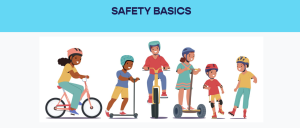
SAFETY BASICS
Welcome to the lesson about safety basics. Students will have the chance to explore why certain rules are in place, particularly the ones designed to keep people safe + healthy. This provides a rationale for them to follow safety rules wherever they happen to be.
ICEBREAKER
What’s a rule or safety tip you know really well? Do you always follow it? (Be honest!)
Teacher note: Let students share examples like looking both ways before crossing the street, wearing a helmet when biking, and avoiding a hot stove. Use this to highlight that we learn safety rules in different places, and then apply these lessons to other situations so that we can do even more things safely. Explain that this lesson teaches about all kinds of safety—it’s not just about bodies, but also feelings, and what to do when something feels off.
LEARNING OBJECTIVES
- Recognize common safety risks in everyday environments like streets, fields, playgrounds, and public places.
- Understand how protective gear and rules keep the body safe.
- Identify unfamiliar or unsafe substances.
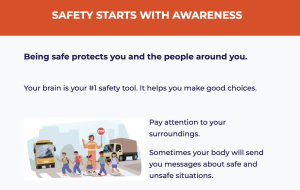
SAFETY STARTS WITH AWARENESS
Being safe begins with noticing what’s around you. Your eyes, ears, and brain work together like a safety team. They help you notice cars, curbs, steps, balls flying, or even when something “just doesn’t feel right.” You can't stay safe if you're not paying attention!
Places that are usually safe can become unsafe if you're distracted. A sidewalk is safe, unless you're walking with your head down looking at something in your hands. A soccer field is fun, unless you run into someone because you weren’t looking.
Ask the class: “Can a safe place become unsafe? How?”
Your brain is your #1 safety tool. It helps you make choices quickly. But your brain works better when you slow down just a little bit before acting. An example: Before you cross the street, you stop and look. Before you chase a ball, you take a second to check what’s around you. That’s your brain being smart.
Safety is about protecting yourself and the people around you. When you follow safety rules, you’re also helping others stay safe. If you're careful while biking, walking, or swinging a bat—you’re protecting your friends and teammates too.
Ask the class: “How can your safety choices help someone else?”
Some risky situations are obvious, but others are harder to figure out on your own. Running into the street is clearly unsafe. But what about jumping off the top of the monkey bars? Or grabbing something hot before asking?
Teach the habit: “If I’m not sure, I pause and check.”
Pay attention to your surroundings AND your own body. Sometimes your body will send you messages. These are signals, and you can learn to listen to them.
- A tight stomach might mean you're nervous.
- Fast breathing might mean you’re scared.
- Goosebumps might mean you feel something’s off.
CLASS ACTIVITY: WHERE’S THE RISK?
Use the “Where’s the Risk?” activity to practice recognizing and noticing real-life safety issues.
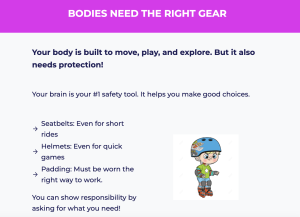
BODIES NEED THE RIGHT GEAR
Your body is built to move, play, and explore, but it also needs protection. Just like you wear a coat when it’s cold or sunscreen when it’s sunny, your body needs the right gear to stay safe during different activities. Helmets, seatbelts, shin guards, and padding aren’t just “extras”—they’re tools that help your body stay strong and injury-free.
Gear protects the parts of your body that can’t protect themselves.
- Your brain is soft and powerful—it needs a helmet to keep it safe during crashes or falls.
- Your bones and joints help you run and jump, but they can bruise or break if they’re not padded during sports or skating.
- Your skin can scrape or cut easily—long sleeves, gloves, or pads can help.
Even short rides and quick games still need gear. Accidents don’t wait for a full game to start.
- You can fall off your bike on the driveway.
- You can slip while rollerblading at home.
- If you’re moving your body fast or near other people or vehicles, gear matters.
Gear has to be worn the right way to work.
- A helmet that’s too loose can slide off.
- A seatbelt under your arm won’t protect your chest.
Using gear helps keep other people safe, too. If you fall without gear and get hurt, someone has to stop the game or call for help. If you run into someone on your bike without a helmet, you could get hurt and hurt someone else
Ask: “How does wearing your gear show respect for your teammates and friends?”
You are in charge of asking for what you need. You can speak up and say:
- “I need my helmet before I ride.”
- “I can’t play without my pads.”
- “Can you help me buckle this the right way?”
Reinforce that asking for gear or help isn’t being difficult—it’s being responsible.
If you have time, play this 5-minute video about safety gear from Miacadamy.
CLASS ACTIVITY: GEAR MATCH-UP
The “Gear Match-Up” activity helps reinforce the importance of safety gear in real-life activities.
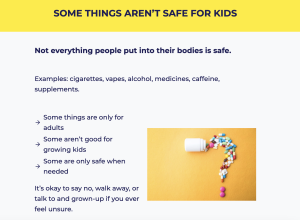
SOME THINGS AREN’T SAFE FOR KIDS
Not everything people put into their bodies is safe, especially for kids. Certain pills or powders can hurt growing bodies + brains.
Some adults use things like cigarettes, vapes, alcohol, or other drugs, but those choices aren’t right or safe for kids. It’s OK to say no, walk away, or talk to a grown-up if you ever feel unsure.
Brains are smart, but they need information to make good choices. If you find something, like a pill, a bottle, a can, a powder, or even a colorful candy, and you don’t know what it is or where it came from, don’t touch it. Don’t sniff it. Don’t taste it. Don’t take a chance.
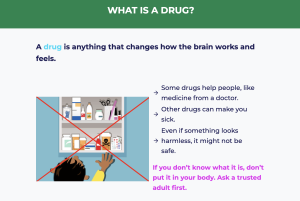
WHAT IS A DRUG?
A drug is anything that changes how the brain works and feels.
Some drugs help people, like medicine from a doctor. But other drugs are harmful, especially when they’re used the wrong way or without permission.
Kids should never be in charge of deciding if they should take a drug—that’s for a trusted adult to help with. Even if something looks harmless, like a colorful drink, a vape that smells like (and tastes like) candy, or a bottle that says “energy” or “boost,” it might not be safe. That’s why we use this rule:
If you don’t know what it is, don’t put it in your body. Ask a trusted adult first.
CLASS ACTIVITY: SAFE OR NOT SAFE?
The “Safe or Not Safe" activity helps students think about real-life scenarios and what they would do.
SUMMARY
Staying safe doesn’t mean you stop playing or riding or exploring. It means you learn the rules, use your tools, and listen to your body and brain. That’s how you keep yourself and others safe, smart, and strong.
LET'S TALK ABOUT IT
Ask:
- What’s one smart choice you made recently to stay safe?
- What would you do if a friend was about to make an unsafe choice?
- Why is being safe part of being a good friend or teammate?